 By realmnova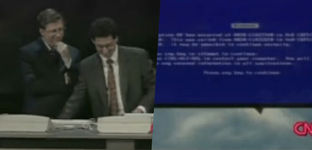
In order to avoid a repetition of the embarrassing scene of Blue Screen of Death, senior Microsoft engineers recently recalled in their blog that, in 1998, when new buildings were built at the company park, a room for special testing equipment was added to prevent the system from going over again during the subsequent launch.
PPC Gamer reports that the history of Microsoft’s early launch is a disaster museum in the IT world, with Steve Ballmer sweating and shouting, “Developers!!” and Don Mattrick sinking Xbox One before he leaves port, but the best is the Windows 98 pre-sale launch.
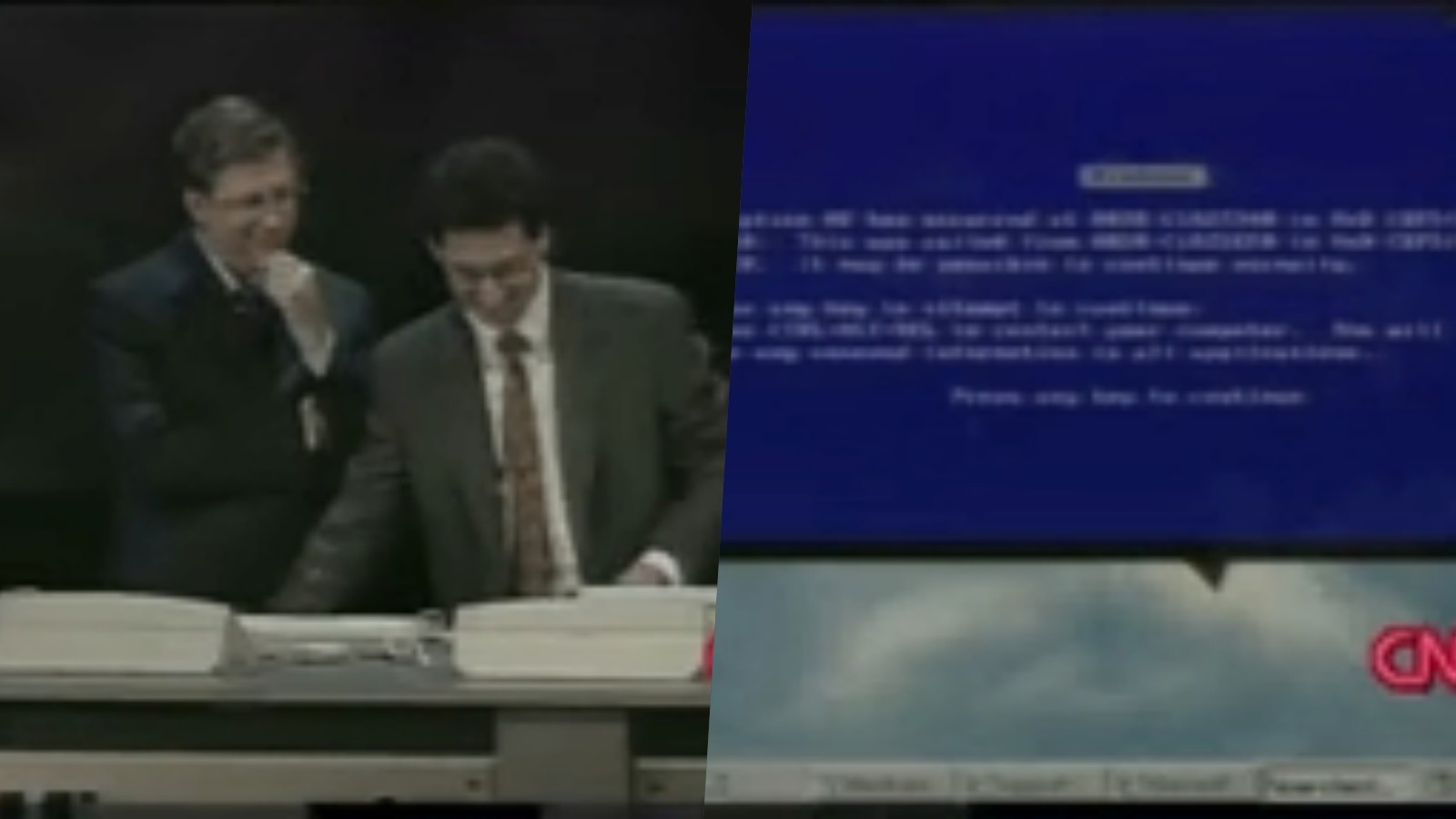
In November 1998, Windows 98 had not been officially sold, Microsoft was publicly presented at the Chicago COMDEX Expo, and the then Microsoft High-Level Director, Chris Caposela, was demonstrating a new feature “Plug and Play” USB support in front of Bill Gates, with the intention of showing how scanners could be plugged and driven by automatic download.
As a result, the system collapsed in the sight of the crowd, and the sound of the machine led to a total error, with Bill Gates standing next to it only laughing at the embarrassment: “That’s probably why we haven’t officially launched Windows 98.”
However, the accident was more dramatic than the outside world could have imagined, with a senior Microsoft engineer, Raymond Chen, recalling that the company was designing a new filming and live broadcasting centre, Microsoft Productions, and that the blue scene had made the team urgently revise the building blueprint and add a new “preparatory room” for testing equipment next to the main studio.
“Any computer equipment to be used in live broadcasts must be fully installed and tested in this room to confirm stability before it can be used by the moderator.” The system later became the standard process for live webcasting by Microsoft.
It sounds natural, and Chen also wrote an additional article about the real reason why he left.
The development team had previously tested the scanner in the laboratory, but the presentation team temporarily went to the local electronics mall to buy another. The Scanner that was “on-site” bought from the USB port drew over-standard power, triggered an error in the system that had not yet been repaired and eventually led to the famous BSOD.
The release flipped the microsoft, and in the subsequent Project Studies design, all the live devices had a complete test, “Don’t want any more blue images on camera,” Chen said, “The system has worked so far.”
What happened to the “problem scanner” that embarrassed Bill Gates and indirectly contributed to the birth of the new testing room? According to another former Microsoft employee and Chen, it was later fixed on a World War II infantry helmet, dressed by engineer Brad Carpenter as a war room to walk into the Windows project, to be symbolic, always reminding the team that the blue image should not be on the stage.