 By realmnova
In a recent interview with the Thai media, TikTok Chanida, Director of Public Policy for South-East Asia, responded to concerns about the location of TikTok Shop in the Thai electricity market, logistics cooperation and the quality of goods, providing official clarification of market monopolies and low-quality imports.
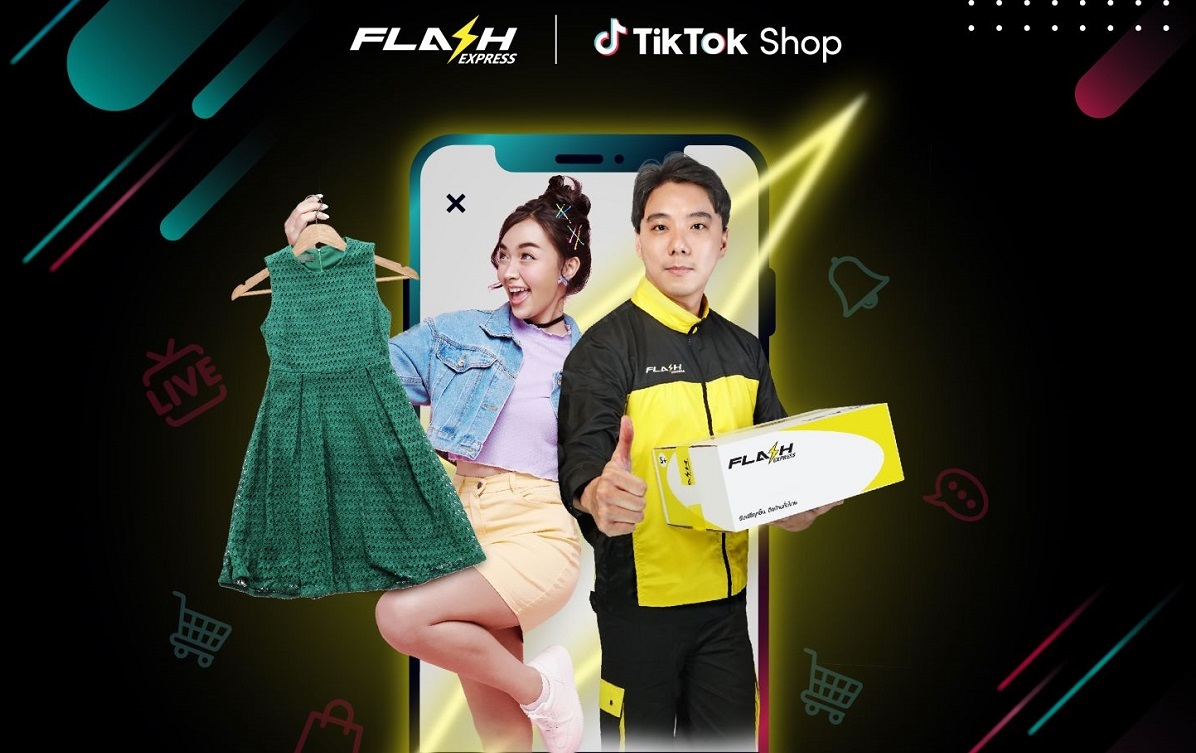
Chantal has made it clear that TikTok Shop does not monopolize the Thai electricity market, especially in the logistics sector. She pointed out that TikTok Shop ‘ s shop system supported a number of logistics companies and that the main partners currently included Thai postal, J&T Express and Flash Express, with businesses choosing distribution services on a demand-driven basis and the platform not interfering with logistics options.
This statement responds to external concerns about TikTok Shop’s deep cooperation with J&T Express. Previously, reports that J&T Express has become a major logistics partner in TikTok Shop have led to local logistics enterprises such as Thai postal to question the fairness of competition in the market.
According to market data, the Thai express delivery market continues to grow as a result of the electrician boom. Mordor Intelligence predicts that the Thai Express market will grow to $2.86 billion by 2025, to $4.04 billion by 2030, with a compound annual growth rate of 7.16 per cent. TikTok Shup’s “Shoppertification” model (in combination with short video and electric operators) has significantly increased the demand for package distribution, and companies such as Flash Express and J&T Express have seized the growth dividend of social electric operators through their collaboration with TikTok Shop.
Flash Express has been a regional logistics partner for TikTok Shop since 2022, providing distribution services covering 77 provinces in Thailand and processing over a million parcels a day. J&T Express obtained 2.54 billion baht in 2024, with a loss of profit (819 million baht), partly as a result of the increase in orders from TikTok Shop.
Chanetha stressed in particular that J&T Express was not a TikTok company, but an independent Chinese logistics company. Although Thai postal remains a market leader, its distribution share in TikTok Shop is only 1-2 per cent, well below that of J&T and Flash Express. This openness to logistics provides more options for business, but also reflects the competitive pressures of local logistics enterprises in the social power surge.
In response to external concerns that the influx of Chinese commodities could lead to quality problems, Chanetha stated that TikTok Shop had a professional team to conduct a rigorous pre-arrangement screening and to monitor the sale process on an ongoing basis to ensure that the goods conformed to Thai regulations and platform standards. She stressed that TikTok Shop was committed to preserving a fair electrical ecology and avoiding the erosion of consumer trust by low-quality goods.
The Thai electricity market grew by 14 per cent in 2024, with a total value of 1.1 trillion baht, and is expected to reach 1.6 trillion baht in 2027, making it the second largest electricity market in ASEAN. TikTok Shop has rapidly emerged as a major player, with the unique advantage of social utility. However, its rapid expansion has also raised concerns among local enterprises. Pawoot, an electrician expert, noted that the high cost of TikTok Shop and the bias towards Chinese goods could undermine the competitiveness of local SMEs, and called on the Government to strengthen regulation, such as through collaboration with the Electronic Exchange Development Agency and the Trade Competition Commission, to develop stricter cross-border electricity policies.