 By realmnova
Netflix’s proposal to acquire the Warner brothers raised concerns about the future of the video studio, IP ownership and the entertainment industry as a whole. This major deal is clearly not out of interest in the Warner Game Department. There is, however, little outside interest in the evolution of Netflix ‘ s own game strategy and in the real results of the platform revealed by current data.

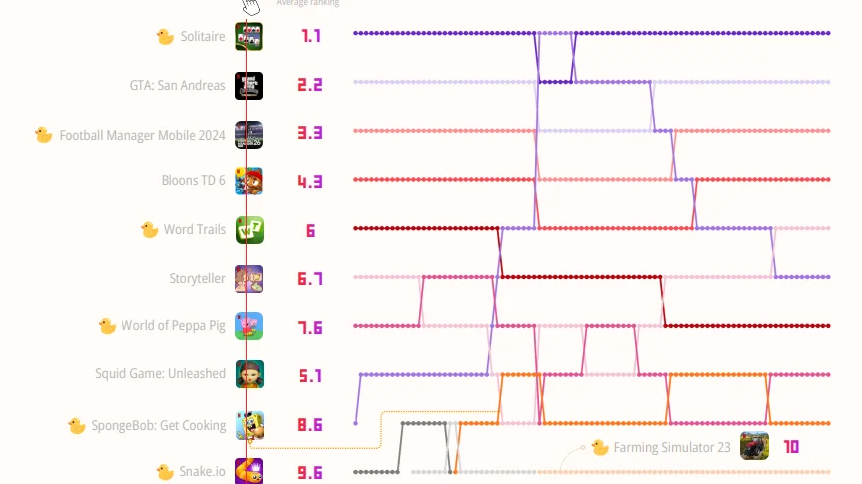
Netflix is now extremely concerned with the amount of user interaction.Since early 2025, the streaming media platform has stopped regularly disclosing the number of subscribers, instead placing emphasis on interactive indicators. This is probably due to the saturation of the global subscription market, where Internet flight, with its pre-maturity advantage, naturally occupies the high ground under the new measure of “use if success”. The game is the hallmark of this strategy, and an analysis of the platform’s game house, based on the “Netflix children’s play report” previously published by the Game Industry, shows that certain specific types of games receive sustained attention. Netflix’s game path is developing rapidly: from an earlier interactive film, Black Mirror: Bandersnatch, to mobile games, it now has over 100 pieces. In the near future, the platform has identified game strategies as four pillars: mainstream games, narrative games, party games and children ‘ s games. However, the performance of specific works under each category is more telling than the classification. The key question is: What are the popular games? According to the data, classic hand-shows such as card cards and snake-eaters have always occupied a place, as has the status of ” Roasted Carjackers: St. Antilles ” and ” Football Managers Swim ” . While the IP adaptation game is visible, its peaks are low and declining faster and its performance is rather unstable.
Children ‘ s games are showing clear growth.From the user experience, games have appeared directly on the children ‘ s personal data page since last weekend. “A great deal of our early work has been to establish the right foundation, especially the threshold of parental control and security. It is now possible to provide a more seamless experience for younger members, according to Lisa Burgess, General Manager of Netflix Children’s Games. Many Netflix children’s games were at the top of the United States app store list last weekend, and as the issue of detectability is resolved, together with clear values for parents, it is foreseen that pre-school games will have more places on the game list in the future. However, parental consent remains central. While the game is now on the children ‘ s resource page, it still needs to be downloaded through the app store. This is a point that needs to be handled carefully for younger users. The challenge is to balance visibility, accessibility and security. For Netflix, the games on the children ‘ s resource page solved the difficulties identified, but it was important to keep parents involved in the download process. The platform continues to introduce new, well-known IP adapted games, such as Wang Zhuong Dynasty and SpongeBob. “We focus on highly familiar and cross-cutting IPs for children, including the platform’s own hot IPs, and famous toys or literature IPs,” Lisa Burgess explains. This is a continuation of Netflix’s consistent strategy on child content procurement: both the introduction of mature brands such as Piggy Pec and the development of YouTube creator-led content such as Ms. Rachel and Cocomelon. In addition to games designed for children, the platform has nearly a quarter of the age-appropriate games, such as Viper and Line Cut. At the same time, however, there is still a large number of works not suitable for children, including games adapted to the House of Cards, the Self-Friendly House of Sex Care, and The Manhunter: St. Antilles.
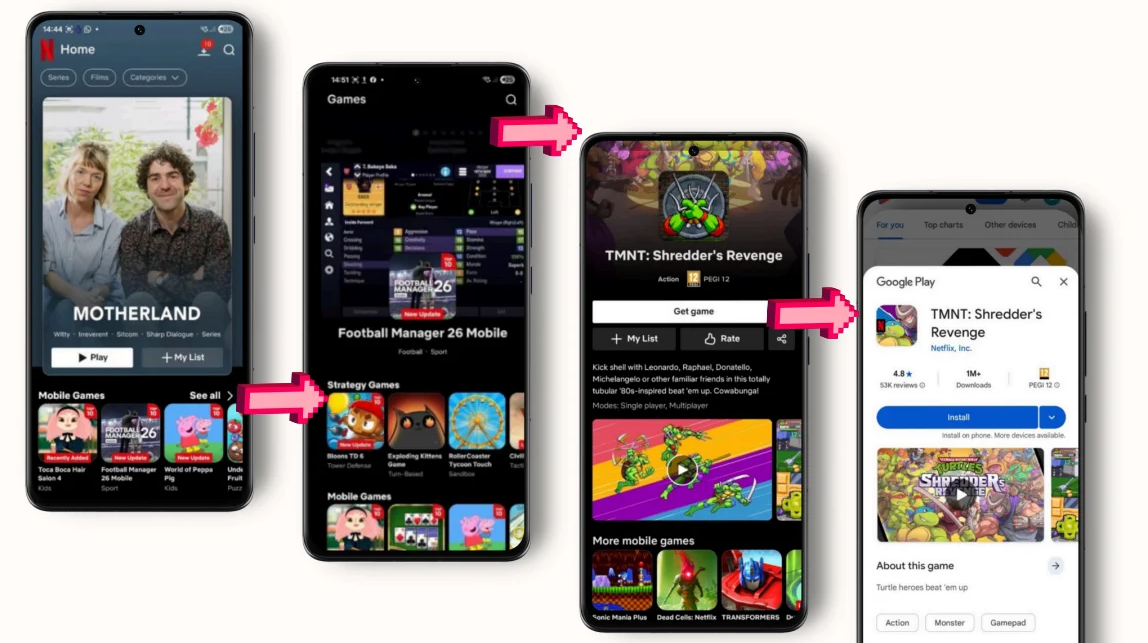
Netflix’s game experience is also attractive to parents, with the interfaces selecting the game, without advertising and without internal purchase. The most visible opportunities remain in the pre-school sector, where parents ‘ trust, well-known IPs and low-threshold practices are most needed. It is no accident that Netflix invested heavily in the infrastructure of this age group before reaching a higher age level. But it is even more challenging to reach older children. Recreational options for children over 6 years of age are significantly diversified in IP and platform dimensions, and Robles is almost everywhere, but Internet flights are also intended to divide a piece. “Looking ahead to 2026, we’re thinking more about how to create a good experience for children aged 6-8… This group is even harder to reach, and ecological competition is more, but not impossible. Although the web-flying game seems to have a renewed focus, its objective has always been to create a platform-specific ecological position rather than to create a business-oriented game vertically. The field of home partying — experience through smartphone extension television interfaces — is revealing its more ambitious strategic objective: to occupy more living rooms and share entertainment. In the area of children ‘ s games, the basis has been laid for cyberflight, where the pre-school market is most clearly valued. Successful access to the larger market for children will be a more complex test, but without the direct liquidity pressure, the platform may be better able to unlock unique forms of innovation. For developers, this means that the key to winning the market for older children in Internet flight will depend on the creation of a game that is centred on an interactive experience rather than on a multidisciplinary approach.