 By realmnova
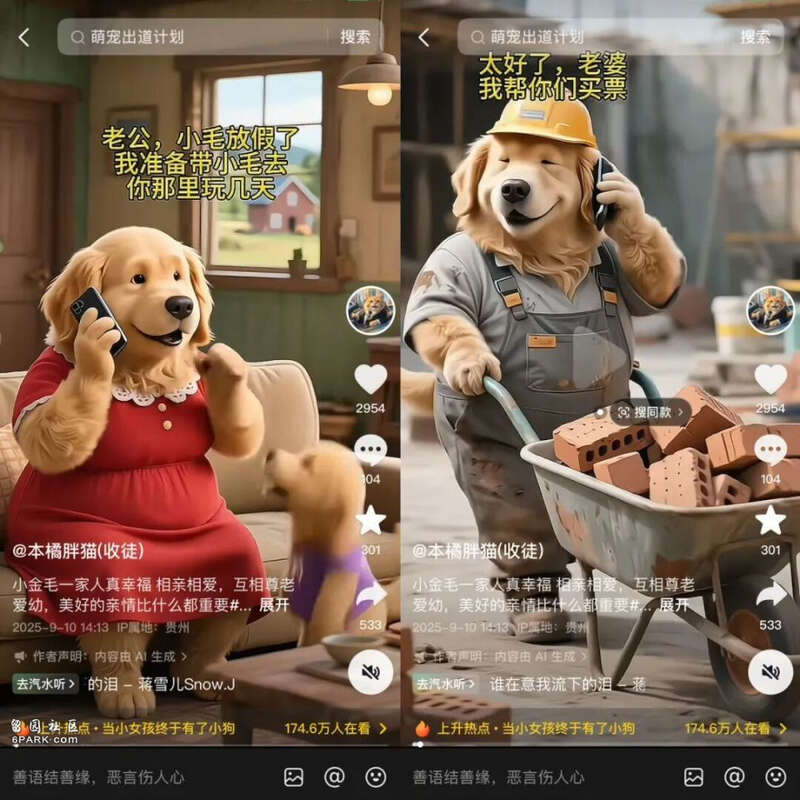
Have you ever done an AI pet play? A pet cat or dog, or an elite in a suit dressed as a professional, or in an old dress, in a court of law, to fight for courage or to experience school fun on the back of a school bag. The rosy image is accompanied by an inverted scene, which makes many people “brushing” and “upside”.
According to industry sources, the AI pet drama has become increasingly popular as a result of the combined effects of short-time dramas, AI technology and the pet economy.
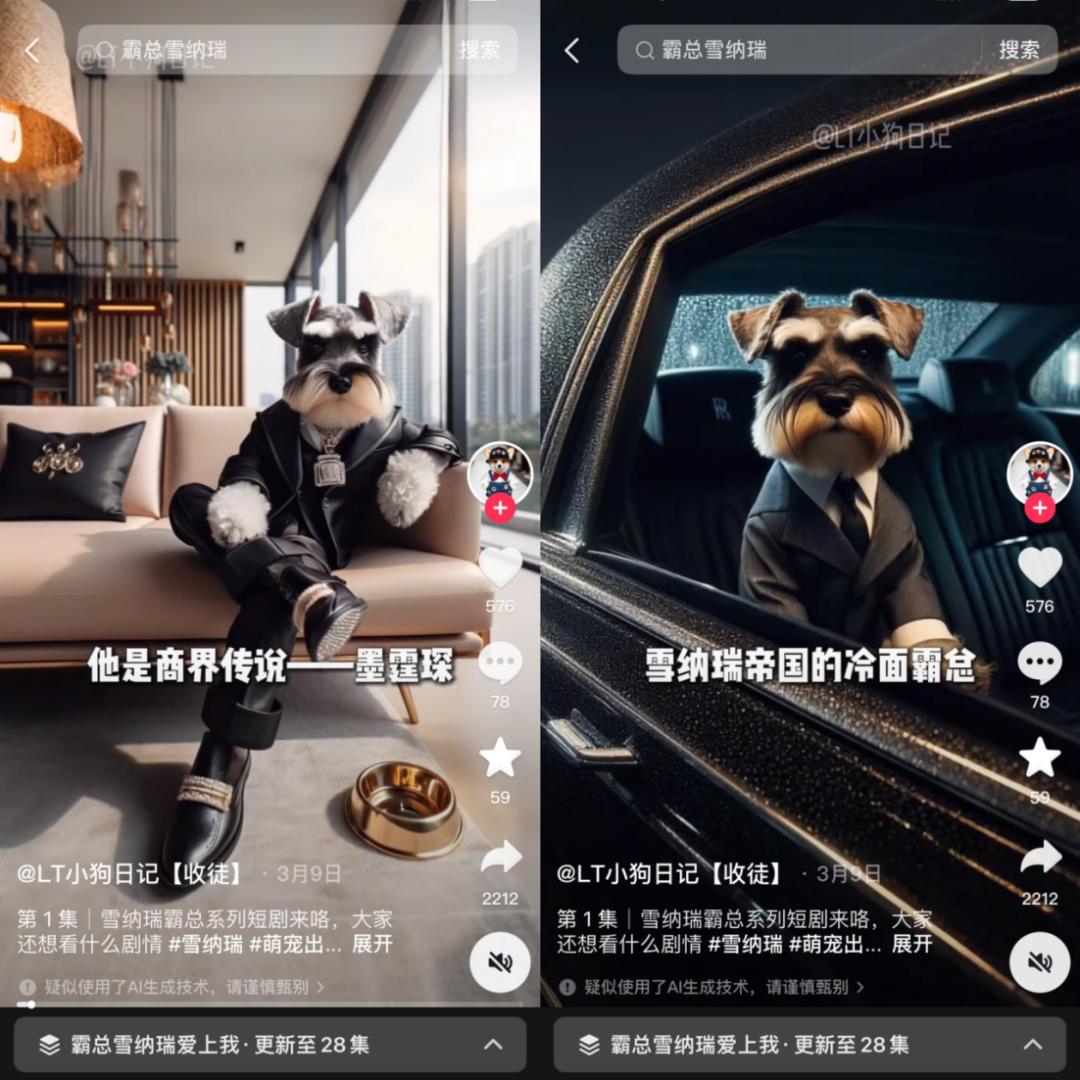
The Ai pet shorts became a short video new star.
“Ai pet shorts are becoming a new star in short video.” Zhu Liangliang, General Manager of the Cultural Communications Company of the Fatty Inn Industries of Anhui Province, said that since last year, the company had set up a new board for the Ai pet shorts and produced a number of online hot Ai shorts.
They can work, they can carry children, they can play in the workplace, they can play in the classics, they can’t wait to paint. On the shivering platform, 82 episodes of the Orange Cat Micro-Sphere were played over 24 million times and 38 episodes of the Fat Orange Clothes were played over 130 million times.
“When the short play heat hits pet economy and AI technology, it gives rise to the short play of Ai pet.”
According to the China Network Audiovisual Development Study (2025), as of December 2024, China had 662 million users of micro-short dramas, with a six-monthly growth rate of 14.8 per cent. The White Paper on the Chinese Petty Industry 2025 (Consumer Report) shows that the pet economy market was over $300 billion in 2024.
The commercial value of the Ai pet drama is also emerging. According to industry sources, the proceeds of the AI pet short play come mainly from two components: advertising, which naturally embeds pets in the play, consumer products, etc., and knowledge fees, which provide training courses in the production of the AI pet short play.
AI helps lower the creation threshold.
“A one-minute video of an AI pet is much more complicated than many people would have imagined.” The director of the shivering account, “LT dog diary”, says Cao Jeju.
In March this year, Cao Jie-Jo began to try to create an Ai pet short play. Before, she just did a simple Ai pet video, no drama. At the beginning of the year, in response to the rush of short dramas, she decided to combine a pet video with a short play and produce an AI pet short play. “Dogs can talk, act, these impossible parts of reality are on the screen,” she said.
The creative process is not easy. “At first, based on audience feedback and personal inspiration, the outline will be extended to a full spectroscopy script using AI; then the spectroscopy will be translated into a picture; then the static image will be turned into a video clip; and at the end, the clip will be completed with music, subtitles and voice referencing.” According to Cao Zhou, “these links are necessary, and they need to be accompanied by tools”.
According to Cao Zhou, AI’s help has greatly lowered the threshold for short play creation. The short play, which used to require professional teams, venues, actors and props, can now be completed by two or three people using computers at a cost of several dozen dollars for tool subscriptions and a small labour cost. “A man like me who has no professional background in video production can make a decent work.” Cao Zhou said that, in order for the picture to be accurate, it would still require a certain degree of artistic excellence and technological accumulation.
But the first attempt was not going well. “Doggies are often `growing’ humans, and they are all over the place, and can only continue to try to select the most natural images from multiple results.” According to Cao Zhou, the accuracy of the picture depends largely on the ability of the writer to edit the hint, the clearer the phrase, the more accurate the feedback from AI. For example, by adding the word “baby” after the word “panda” the role of the pet would be more lovely and more poignant.
Today, the Ai pet short play tracks are becoming crowded and competitive. “Technology is low, and others quickly learn, and even do better than you.” According to Cao Zhou, short play production should focus on creative work to keep the audience fresh.
The story and the emotion are the key.
“Seeing this orange cat is like seeing myself.” Wang Lin, who works in Beijing, smiles at the orange cat in the Ai pet play. On the screen, an orange cat with a pair of shoulder bags, rushing to the office, exaggerating. “Many scenes are routine, very intergenerational.” Every day on her way to commuting, she used to do a couple of AI pet plays.
The pets are cute, and AI technology makes them change, they can run, they can explore, they can even fight in court, and new roles and dramas attract a large audience.
According to Dong Sun-woo, an associate professor of the Chinese People ‘ s University ‘ s School of Journalism, it was no accident that the Ai pet short play had gone red. In the Internet culture, pet cats and dogs have long been given the attributes of the expression kit, the “play-sense” that, when combined with the short play scenario, create a ridiculous and friendly backlash that brings joy to the audience.
“It’s fun to watch a real-time play, and to see a cat in a 1980s costume.” Wang Lin said. In the comment area of Rebirth 80: I’m a fan of a sales club, a number of Internet users show photos of their pets and leave a message, “Get a role for our pets.
According to industry sources, the Ai pet shorts that can “break the circle” capture the emotional needs of the audience with precision. In real life, people’s interaction with pets is limited by time and space, while the screen of the Sabotage Child is 24 hours online. Whether it’s a sweet day-to-day scene, a funny twist, or a skeptical drama, each type of content allows the audience to resonate with emotion in a pleasant atmosphere. The image of the pet not only provides a visual attraction, but also a vector of emotional expression.